News

...
President of the AIU joins the new Public Council of the Ministry of Science and Higher Education of the Republic....
Wed, Dec 3, 2025, 6:57 AM

On December 2, 2025, the first organizational meeting of the new Public Council on Science, Higher Education, and Language Policy of the Ministry of Science and Higher Education of the Republic of Kazakhstan was held. Its members included Akhylbek Kazhigulovich Kurishbayev, President of the National Academy of Sciences of the Republic of Kazakhstan under the President of the Republic of Kazakhstan; Beibit Baimagambetovich Mamrayev, state and public figure; Serik Aztayevi Irsaliev, President of Astana International University and President of the Beles Center for Analysis and Strategy; and Naiman Bubeyevich Kalabayev, state and public figure. Rector of the University "Turan-Astana" Dzhaparova Gulzhamal Alkenovna, Rector of the University "Esil University" Taubaev Ayapbergen Aldanayevich, Chairman of the public association "Kazakhstan branch trade union of workers of education, science and higher education" Mukasheva Aigul Maksatovna, Editor-in-chief of the republican educational socio-political newspaper "Bilimdi el - Educated country" Turkestanova Lyazzat Maksutovna, Director of the Department of Human Capital Development of the National Chamber of Entrepreneurs of the Republic of Kazakhstan "Atameken" Beisenbenov Azamat Amangeldinovich, President of the Public Foundation "Bilte Qory" Mysa Makpal Mazaqqyzy, Chairman of the Association of Legal Entities "National Association "Pest Control" Dyusekov Talgat Petrovich, Director of the Association "Kazakhstan Council of Foreign Investors" Baidasheva Zhanna Amanovna, Supervisor of the Center for Inclusive Support "L.N. Gumilyov Eurasian National University. Yaroslava Nikolaevna Kovaleva, Vice-Rector for Research and Innovation at the K. Kulazhanov Kazakh University of Technology and Business, Yelaman Kanatovich Aibuldinov, Vice-Ministers of Science and Higher Education of the Republic of Kazakhstan Dinara Rinatovna Shcheglova and Gulzat Izbasarovna Kobenova, and Aigul Kakimbekovna Sadvokassova, Director of the Republican State Enterprise "Institute of Philosophy, Political Science, and Religious Studies" of the Science Committee of the Ministry of Science and Higher Education.

 The composition and chairpersons of four Public Council committees were elected. S.A. Irsaliev, President of Astana International University, was elected Chairman of the Public Council Committee on Regulatory Legal Acts and Anti-Corruption.

...
AIU held a lecture at School-Lyceum No. 73: Introducing Students to Scientific Research
Mon, Dec 1, 2025, 12:53 PM

On November 28, 2025, Samal Zhamalova, a senior lecturer at Astana International University and a Master's student, delivered a lecture on "Scientific Research: Introducing Students to Science" for students at Physics and Technology School-Lyceum No. 73.

The event was held as part of the week of the methodological association of physics and computer science teachers and was aimed at increasing students' interest in scientific inquiry and project work.

During the lecture, students were introduced to the key stages of scientific research, modern approaches to developing research skills, and methods for organizing project and laboratory work. Particular attention was paid to setting research problems, planning experiments, and accurately presenting results.

Speaking to the students, Samal Zhamalova noted that early immersion in scientific work contributes to the development of critical thinking, independence, and responsibility—qualities necessary for future specialists. The speaker emphasized the important role of information technology in modern scientific research, including digital tools for collecting, analyzing, and visualizing data.

The students showed great interest in the materials presented, asked questions, and discussed research project examples. Following the event, the participants noted that the lecture helped them better understand the scientific process and the opportunities offered by participating in scientific competitions and conferences.

AIU's collaboration with School-Lyceum No. 73 is part of a systematic effort to popularize science among young people and support schoolchildren striving to develop their research skills.

...
AIU master’s students discuss integrating artificial intelligence technologies into English language teaching
Mon, Dec 1, 2025, 12:40 PM

Astana International University's Pedagogical Institute hosted a research seminar for second-year master's students in the "Foreign Language: Two Foreign Languages" program. The seminar focused on the integration of artificial intelligence technologies into English language teaching. The event was organized under the guidance of A.I. Sarsenbaeva and D.B. Kaikenov, senior lecturers in the Department of Foreign Philology.

During the seminar, the participants examined the opportunities and challenges of using artificial intelligence technologies in teaching English. They discussed the prospects of using AI tools to develop language skills, personalize learning, and foster students’ critical thinking and digital literacy.

Special attention was paid to the ethical aspects of using AI in education, issues of academic integrity, and the role of the teacher in the context of digital transformation. The master’s students presented their own research and practical examples of integrating AI-based services into English language lessons.

As part of the event, a student debate was held in which teams discussed the advantages and disadvantages of using artificial intelligence in the educational process. The debate contributed to the development of argumentation skills, public speaking, and academic discussion in English.

Holding the scientific seminar enabled the master’s students to demonstrate their professional and research competencies, deepen their understanding of current trends in language pedagogy, and outline further directions for integrating digital technologies into foreign language teaching at AIU.


...
An exhibition dedicated to Kazakh heritage and national identity was presented in Astana
Mon, Dec 1, 2025, 12:26 PM

 Astana International University hosted a three-day exhibition by Kazakh artist Minura Lukpan, dedicated to understanding Kazakh cultural heritage, traditions, and language. The exhibition combines themes of historical memory, decolonization, and the preservation of national identity, offering visitors a deep and multilayered perspective on the formation of cultural identity in modern Kazakhstan.

          The exhibition "Tarihsyz. Tarih-siz" grew out of a desire to understand how Kazakh culture loses its meaning when the connection between language, memory, and identity is disrupted. In the context of rapid globalization, many elements of tradition are being displaced or distorted, and the artist seeks to demonstrate that preserving identity is impossible without careful attention to words, images, and historical heritage. Through her visual works, Minura brings viewers back to the value of tradition and the responsibility to the cultural memory that shapes our collective "biz."

          This is the basis for the exhibition's title: "Tarihsyz. Tarih-siz," where a single word reveals two opposing meanings. Tarihsyz means "without history," a state of lost roots and devalued language. Tarih-siz addresses the viewer: "history is you." The exhibition's concept emphasizes that identity is destroyed not suddenly, but through the loss of everyday cultural practices. However, it is the individual the -siz-who is capable of reclaiming what has been lost, reconnecting with ancestors and reviving culture in the present.

          One of the exhibition's central elements is an artistic reinterpretation of the "Zheti Ata" system-an ancient Kazakh tradition aimed at strengthening the continuity of generations and preserving ancestral memory. Through complex visual compositions, the artist emphasizes the importance of spiritual roots and a person's connection to their origins.

Particular attention is paid to everyday cultural practices, including the Kazakh tea ceremony as a symbol of respect, hospitality, and family values. The works on display demonstrate that it is everyday rituals that create an atmosphere of unity and social trust within society. The painting "El Ne Der" depicts the Kazakh habit of living with the thought "isn't it right?" The large, voluminous eyes symbolize the constant gaze of society, which judges and oppresses. Through this image, the work conveys the fear of judgment and shows how public opinion limits personal freedom.

The exhibition also highlights the role of the Kazakh language as a key element of the national cultural code. According to the organizers, language is not only a means of communication but also a crucial tool for preserving identity and cultural continuity. The artistic images encourage the viewer to a deeper understanding of the significance of their native language in the face of global change.

The works "Mambet" and "Katyn" reveal how the loss of the true meanings of words leads to the distortion of cultural memory.

"Mambet." The word once denoted a noble and hardworking person (Mambet batyr, clan, aul), but today it has become an insult. This reflects a disconnection from one's roots and an internal devaluation. "Katyn." Derived from the Turkic title "khatun," denoting a woman of high status. Nowadays, the word often has a crude connotation, demonstrating the devaluation of the female image and cultural values.

The exhibition generated keen interest among residents of the capital and young people. It was attended by master's students in the Design program, as well as students in International Relations, History, and Psychology, who were able to discuss the key ideas of the works on display with the author.

Why is interest in cultural heritage growing today?

According to Galina Nikolaevna, a PhD candidate in philosophy, this is due to the nature of cultural memory itself:

"Cultural memory is ingrained in each of us as a consequence of the social experience of past centuries. At certain periods, it is activated, finding reflection in various forms of art. Reminiscences of themes from the historical past are a constant component of the artistic process," notes Galina Nikolaevna.

What contribution does this exhibition make to the public discussion of the history and culture of Kazakhstan?

She emphasizes that the young artist's artistic expression has significant social significance.

"Every voice of anyone who cares about the history of their people is important. Minura's figurative interpretation of the historical past demonstrates the interest and compassion of the younger generation of Kazakhstanis for the tragic events of the past. Among the works presented by Minura, there is also a sensitive and vulnerable approach to gender issues in our time. This is a marker of our contemporaries' concern for both the past and the present of their people."

Can art preserve everyday traditions that are gradually disappearing?

"Yes, undoubtedly, art helps preserve cultural memory, captured in the visual arts. But... the rapid dynamics of civilization and globalization, which are leveling out ethnic distinctiveness, are reducing the level of influence."

...
AIU hosted an online seminar on “Family Values and Democracy” with a U.S.A. professor
Mon, Dec 1, 2025, 12:24 PM

On November 19, 2025, Associate Professor of the Pedagogical Institute of Astana International University, PhD in Philology A.B. Seisekenova, held an online seminar on "Family Values ​​and Democracy" with John Dreyer, a doctor of Education at the Washington English Language Center who provides language support to citizens of 105 countries. The seminar was attended by students from the Master's program "Foreign Language: Two Foreign Languages," as well as students from the programs "Foreign Language: Two Foreign Languages," "International Relations," "International Business," "Management," and "Data Science."

The seminar focused on the characteristics of family values ​​in the United States, the equal responsibility of young families based on the principles of democracy, educating today's youth about the place of each future professional in society, the future of humanity and the country, and the search for answers to questions of morality, values, and culture. During the seminar, undergraduate and postgraduate students posed numerous questions to the professor and actively participated in the analysis of the topic.

Previously, Ainash Seisekenova completed the research project "Scientific and Methodological Foundations for the Formation of a Culture of Values ​​in Future Specialists in the Context of Shakarim's "Teaching on Conscience"" and completed a research internship at George Washington University in the United States under the Bolashak "500 Scientists" program in the 2024-25 academic year.


...
AIU master's students held an innovative event on the use of AI in creating fairy tales
Mon, Dec 1, 2025, 12:15 PM

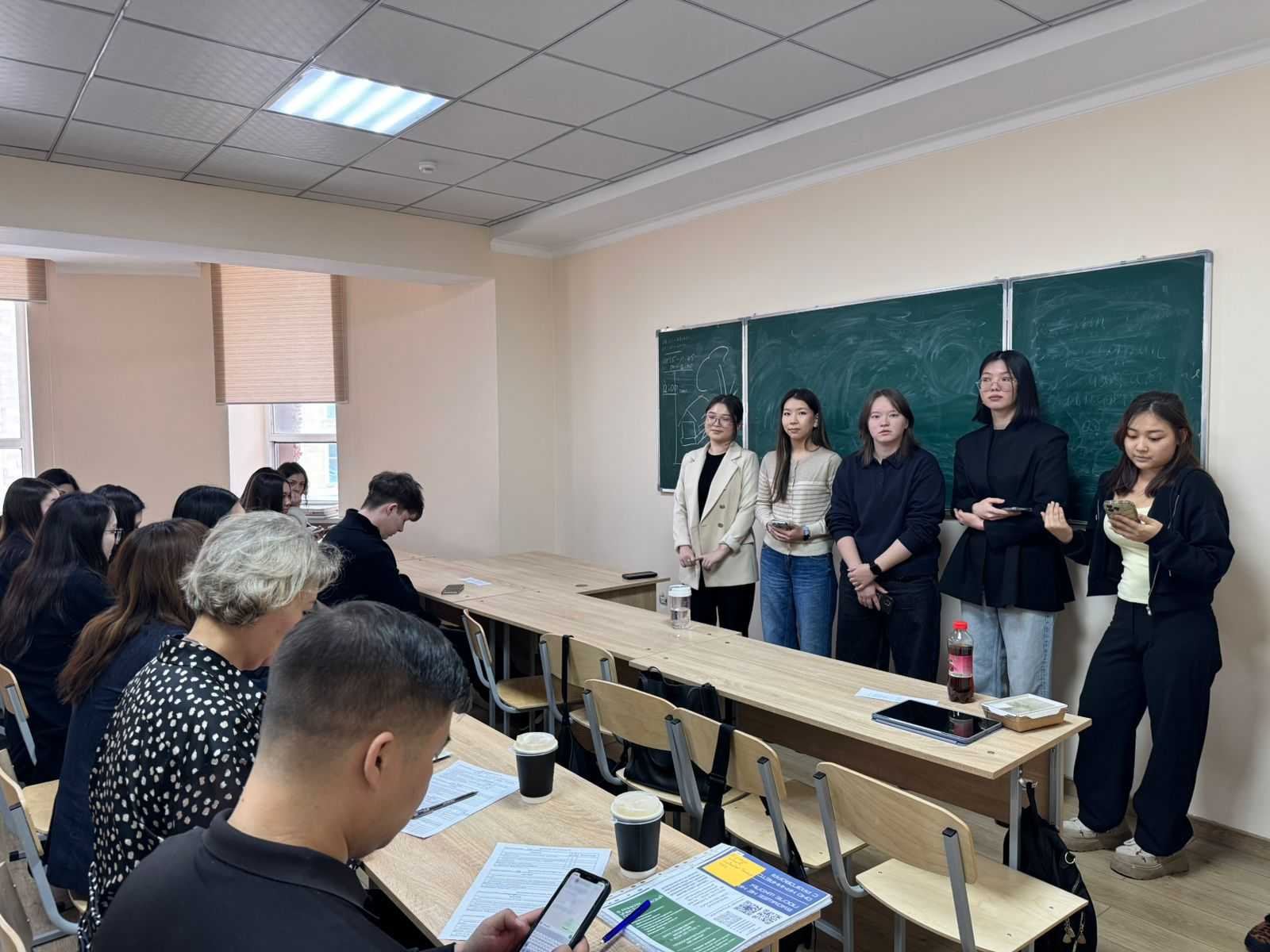
On November 21, 2025, as part of the pedagogical practice of second-year master’s students in the “Foreign Language: Two Languages” program at “Astana” International University, an extracurricular activity titled “The Story of Fairy-Tale: How AI Creates Stories” was conducted with students of group 22:9 of the “Teacher of English and Primary Classes” educational program.

The activity was organized and conducted by master’s students of group FL 24 B: Anuarbek Dias, Shyryn Bakhytkyzy, Kononova Anna, Zikyrov Erasyl, Serikova Zhannur, Seyfullina Jasmine, and Srymova Sabina. During the session, participants presented materials on creating fairy-tale stories using artificial intelligence technologies, discussed the possibilities and limitations of AI in literary creativity, and demonstrated interactive methods for working with texts and engaging the audience.

The event was held under the guidance of senior lecturers of the Department of Foreign Philology, Z.M. Kultanova and N.B. Saifullaeva, and was aimed at developing students’ creative and critical thinking, improving foreign language teaching skills using modern technologies, and fostering interest in the integration of digital tools into the educational process.

The implementation of the activity allowed the master’s students to demonstrate professional competencies, creativity, and teamwork skills, as well as contributed to the development of pedagogical abilities in a practice-oriented learning environment.


...
AIU - THE FIRST UNIVERSITY IN THE CIS AND CENTRAL ASIA TO PROVIDE MASTER'S DEGREE IN SOCIAL ENTREPRENEURSHIP
Mon, Dec 1, 2025, 7:37 AM

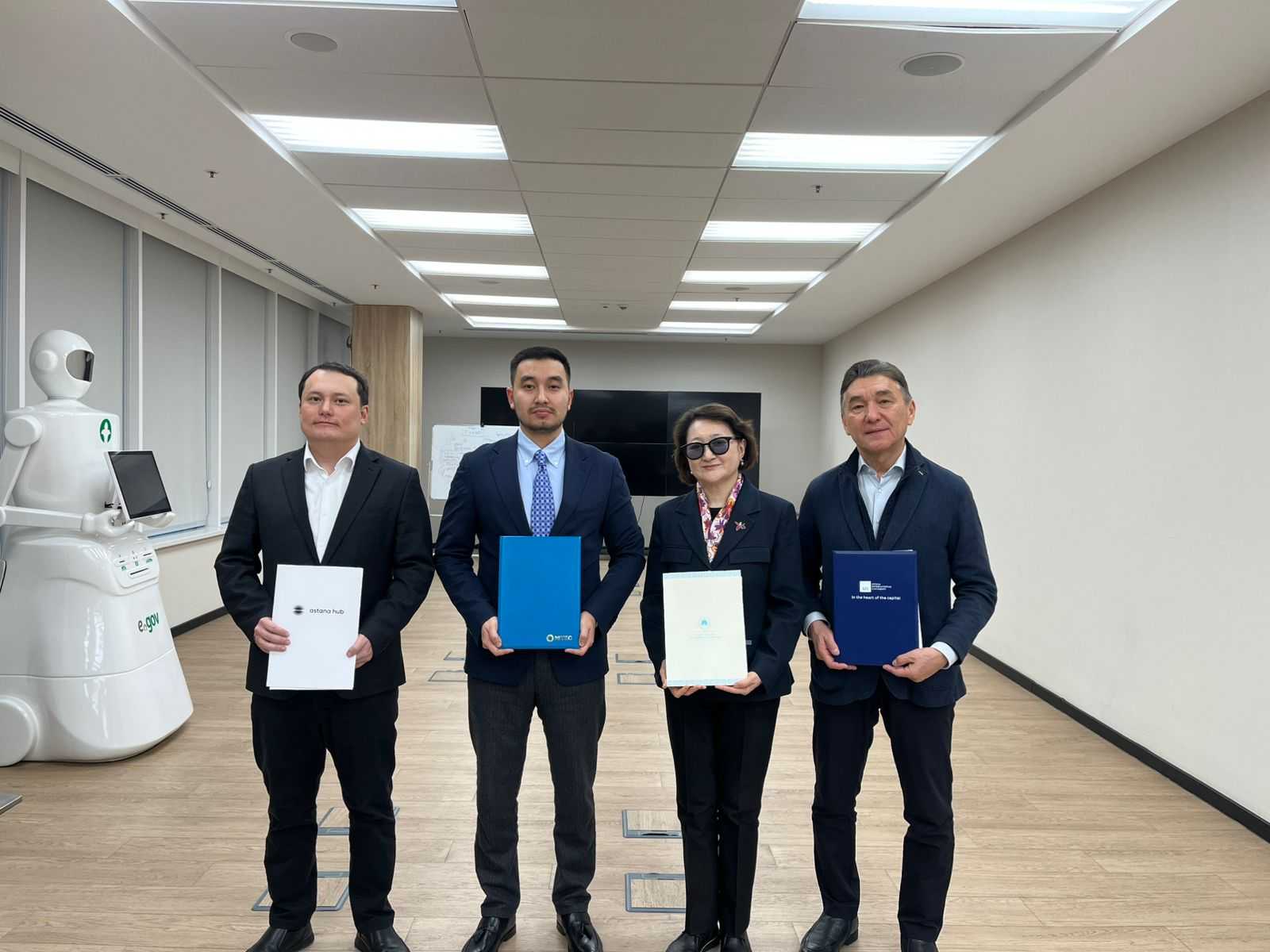
On November 28, Astana International University President S.A. Irsaliev participated in a presentation of the Social Hub to the Minister of Science and Higher Education.

Astana International University is the first and only university in the CIS and Central Asia to offer master's degrees in social entrepreneurship. We are proud to be developing one of the most significant areas of our time, where business meets social responsibility. Today, social entrepreneurs play a vital role in the development of society – they create innovative solutions to social problems, making a real contribution to the economy. According to international studies, approximately 2% of global GDP is generated by the activities of social entrepreneurs, and their social impact cannot be overstated.

Our university is fostering an entire ecosystem of social innovation. Over the past four years, the Ministry of Information and Social Development of the Republic of Kazakhstan has successfully implemented the "Oreli Urpaq" Social Entrepreneurship School project, training over 800 social entrepreneurs and NGO representatives.

One grant-funded research project on social entrepreneurship has been implemented, and work is ongoing on a second one. It focuses on the scientific foundations of employment for individuals with disabilities.

An exclusive zone has been created at the Social Innovation Hub for Astana International University as a strategic partner in education.

Emin Askerov, our Master's degree graduate, is successfully implementing social initiatives, inspiring a new generation of leaders.

The meeting between the President of Astana International University, S.A. Irsaliev, founder of the Social Innovation Hub, and Sayasat Nurbek, Minister of Science and Higher Education of the Republic of Kazakhstan, once again confirmed the importance and potential of this area.

We are confident that training specialists in social entrepreneurship is an investment in a sustainable future. The Master's program in Social Entrepreneurship develops a new type of leader who is able to create social value, benefiting society and the development of the country.


...
EcoChallenge Results: AIU students’ activity in collecting plastic waste demonstrates progress toward sustainable development
Sat, Nov 29, 2025, 3:40 AM

Launched on 10 November and dedicated to the World Recycling Day on 15 November, the EcoChallenge of the School of Natural Sciences at Astana International University has come to its conclusion. The results of this environmental initiative aimed at fostering ecological culture were announced on 28 November.

The EcoChallenge is an important component of the Restart project implemented within the memorandum between the G-Global Green Economy and Development Coalition and Astana International University.

Restart Project: phased development and enhancement of environmental literacy

The Restart project, aimed at building a culture of proper waste management among university students, is being implemented in several stages.

🔹 Since 2024, AIU students have actively used Sparklo reverse vending machines to submit plastic waste and engage in accessible recycling practices.
🔹 In 2025, the project’s infrastructure expanded with new plastic waste collection channels: Freedom vending machines and LS Astana — a secondary raw materials collection and processing center.

LS Astana is an eco-center that receives, sorts, and sends solid household waste to recycling facilities. Students’ active use of this center indicates a rising level of environmental awareness.

EcoChallenge Results

The challenge recorded the following indicators:

• more than 50 video submissions;
• 500 students actively participated;
• 500 kg of plastic waste were sent for recycling.

These indicators reflect strong student engagement in sustainable development initiatives.

Winners

🥇 1st place — EiP 25A group
🥈 2nd place — IYa 24-3 group
🥉 3rd place — Chemistry 24A group

The EcoChallenge contributed to the following UN Sustainable Development Goals (SDGs): SDG 11 — Sustainable Cities and Communities, SDG 12 — Responsible Consumption and Production, SDG 13 — Climate Action, SDG 17 — Partnerships for the Goals

Held from 10 to 28 November and dedicated to the World Recycling Day, the EcoChallenge helped enhance AIU students’ environmental responsibility and strengthen the recycling culture. The Restart project and cooperation with the G-Global Green Economy and Development Coalition represent an important step toward sustainable development at the university.

AIU will continue to support environmental initiatives and advance work toward the SDGs.

Organizers: Aidanа Kydyrova, Ayman Karabalayeva


...
Scientists from the Karaganda National Research University named after Academician E.A. Buketov held a scientific seminar at AIU
Fri, Nov 28, 2025, 5:39 AM

On November 27, 2025, scientists from the Faculty of Biology and Geography of the Karaganda National Research University named after Academician E.A. Buketov visited the Nature Lab research laboratory at Astana International University as part of their scientific collaboration and held a series of scientific and educational events.

Specialists PhD (Biology), Leading Researcher M.Yu. Ishmuratova, PhD (Biology), Head of the Botany Department S.U. Tleukanova, PhD (Biology), and Researcher R.T. Musina held an educational and methodological seminar on "Methods of Microscopic Examination of Plant Objects" for faculty, students, doctoral candidates, and young researchers from the AIU Graduate School of Natural Sciences.

During the seminar, participants:

• learned about methods of microscopic analysis of plant tissues;

• studied approaches to studying the anatomical and morphological structures of plants;

• acquired practical skills in using optical and digital microscopes;

• observed the stages of sample preparation and analysis of microscopic specimens.

The research staff was also introduced to the infrastructure of the Nature Lab laboratory, including equipment for plant genotyping, methods for determining biological activity, and areas of morphological research. The parties discussed prospects for joint research projects, publication preparation, and the exchange of research results.

Astana International University expresses its gratitude to its colleagues from Karaganda National Research University for their fruitful collaboration. The seminar was an important step in strengthening scientific ties between the universities and contributed to the enhancement of the professional competencies of young scientists.

Head of the Nature Lab Laboratory: A.E. Orazov

...
Fostering Environmental Culture: New Initiatives Presented by the Green Steppe Project
Thu, Nov 27, 2025, 12:11 PM

On November 21, Haileybury International School in Astana held a press conference for the "Green Steppe: Sustainability in Every Step" project, which aims to develop environmental culture, volunteerism, and sustainable development principles in Kazakhstan. The event was attended by environmental experts, regional project coordinators, representatives of educational organizations, young environmental volunteers, and government agencies.

The press conference addressed issues of particular relevance to Kazakhstani society. Climate change, biodiversity loss, air pollution, and overuse of natural resources require increased environmental responsibility and the development of environmental education.

Aiman ​​Karabalaeva, PhD, ecologist and senior lecturer at the School of Natural Sciences at Astana International University, presented a report on the initiatives being implemented as part of the "Zhas Galym" project. She emphasized the scientific basis for ecosystem restoration programs and noted the importance of engaging young people in environmental activities. Sholpan Bisembayevna Abilova, PhD, a senior lecturer at HSE AIU, presented a report on "Biodiversity Conservation," focusing on the need to maintain the natural balance, protect rare species, and foster environmental responsibility in society.

Aidana Salamatkyzy Kydyrova, a doctoral student at HSE AIU, and an ecologist and environmental activist, proposed practical methods for promoting an eco-friendly lifestyle among schoolchildren and young people. She emphasized that developing environmental habits from an early age is key to achieving sustainable development in the future.

Results in Sustainable Development Areas

Over the course of its first year, the "Green Steppe" project has united thousands of young volunteers and become a platform for dozens of environmental initiatives. Eco-clubs have been established in many schools, and environmental education has reached a new systemic level.

The project has demonstrated concrete results across the UN Sustainable Development Goals:

• SDG 4: Quality Education: training modules aimed at increasing environmental literacy are being introduced;

SDG 11 Sustainable Cities: the number of environmental projects in urban areas has increased;

SDG 13 Climate Action: tree planting, waste management, and nature restoration campaigns are held regularly;

SDG 15 Life on Land: initiatives to protect rare species and develop nature reserves are supported;

SDG 17 Partnership: cooperation between government agencies, educational institutions, NGOs, and volunteer movements is strengthened.

A Step Toward a Green Future

The press conference demonstrated the importance of open dialogue in fostering environmental awareness in society. The meeting of experts, educators, and young people provided a platform for discussing new ideas and exchanging experiences in sustainable development.

Caring for the environment is a shared responsibility of society as a whole, not just individual organizations or specialists. Projects like "Green Steppe" help develop environmental awareness and foster a responsible attitude toward nature among young people.