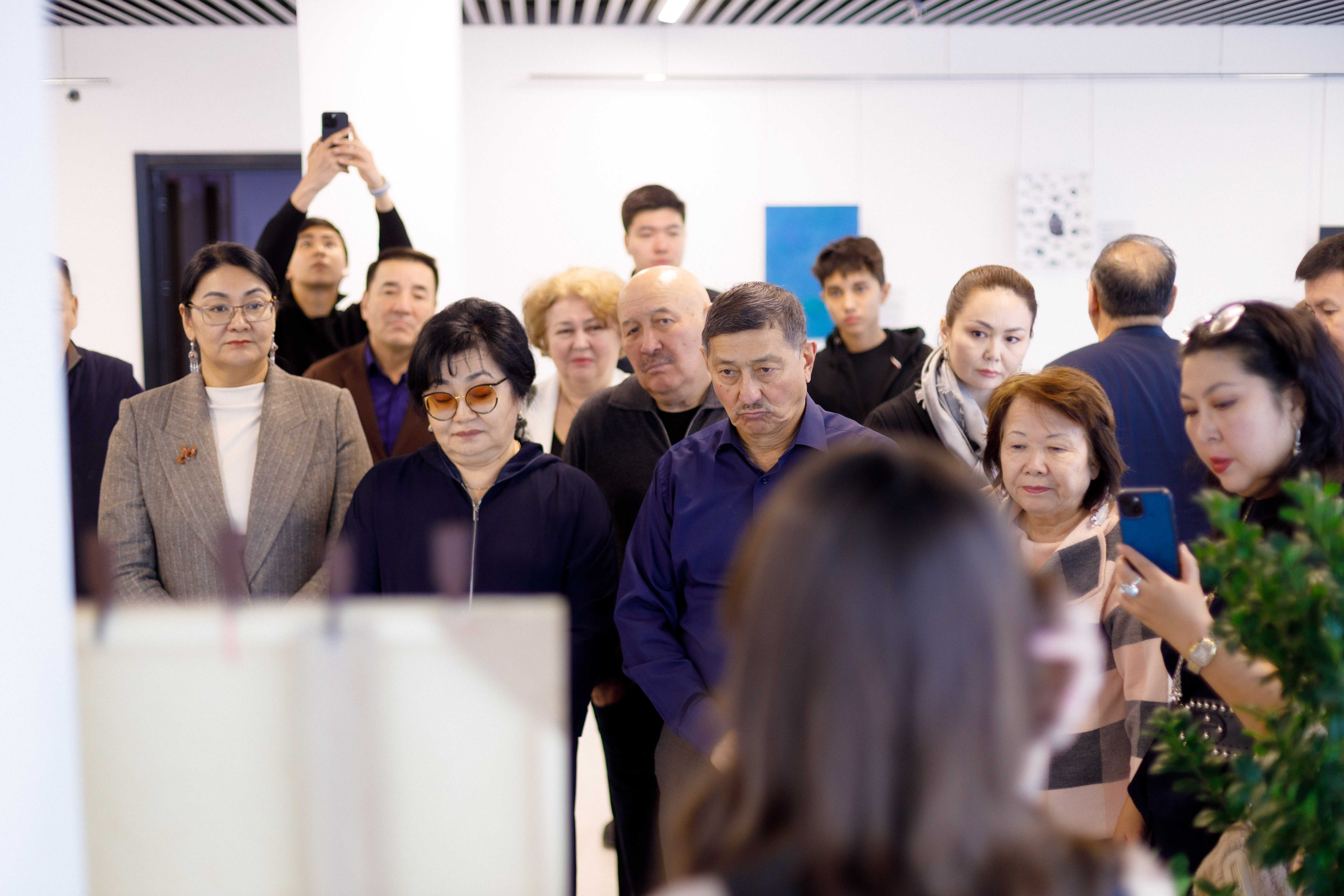


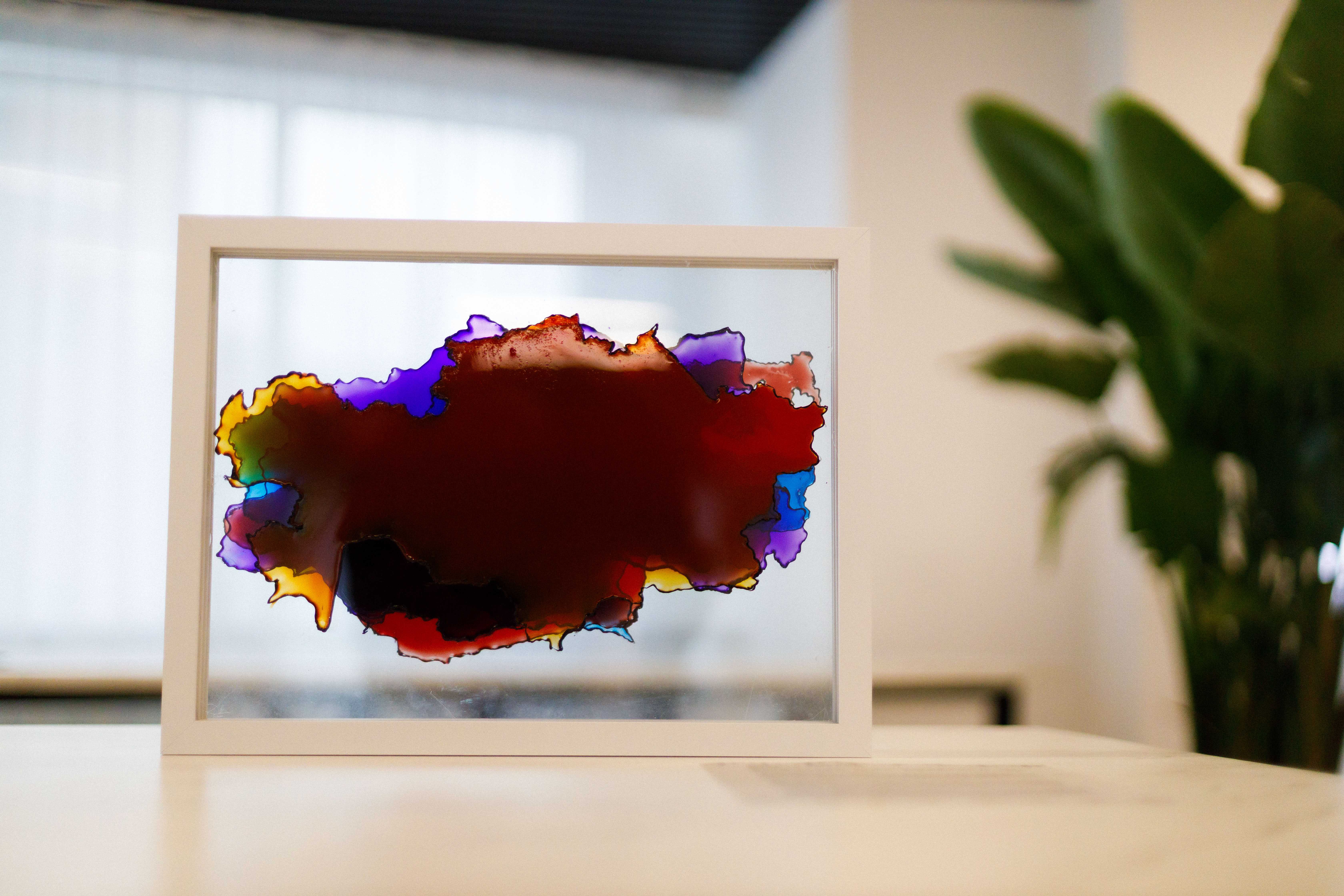
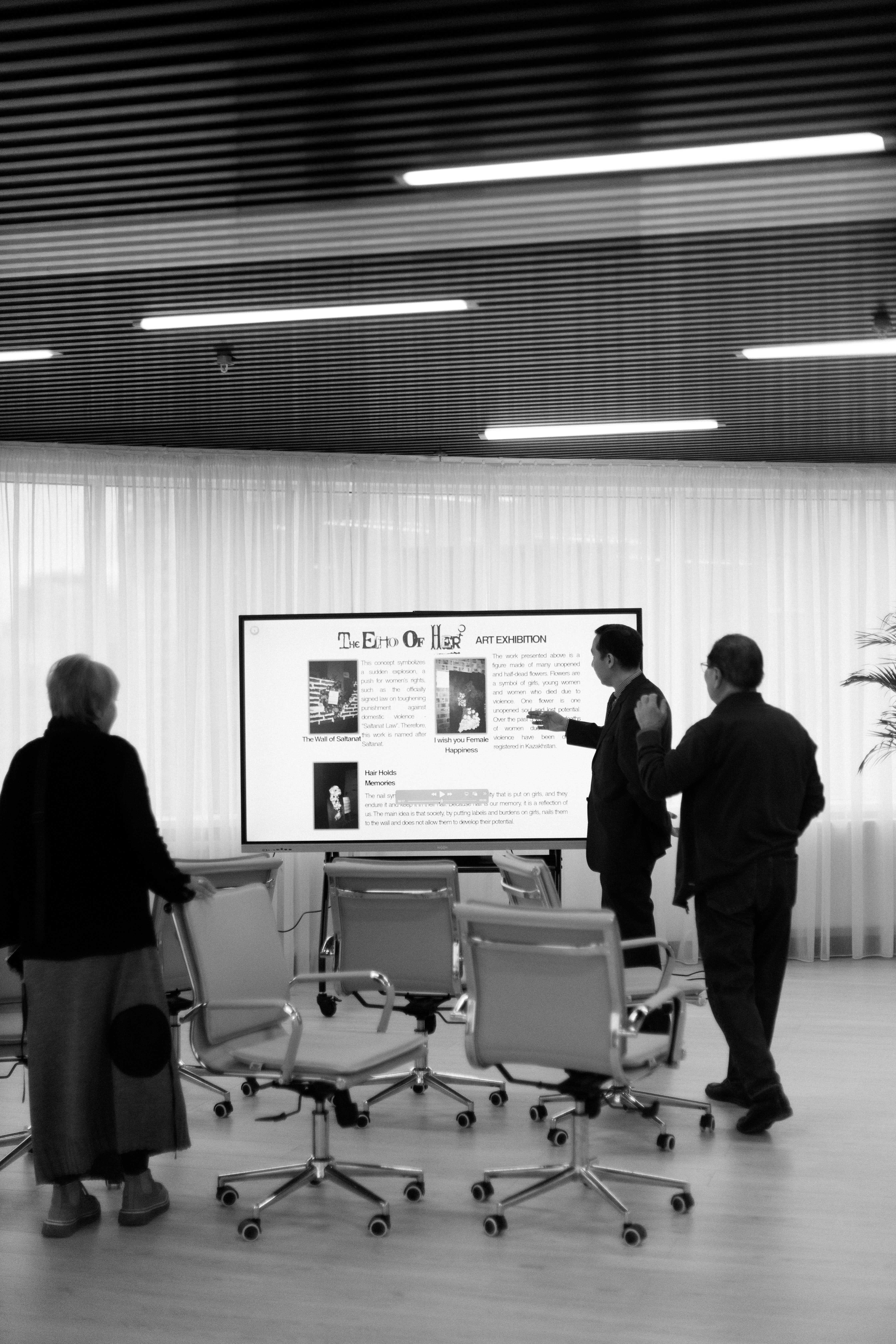


Astana International University hosted a three-day exhibition by Kazakh artist Minura Lukpan, dedicated to understanding Kazakh cultural heritage, traditions, and language. The exhibition combines themes of historical memory, decolonization, and the preservation of national identity, offering visitors a deep and multilayered perspective on the formation of cultural identity in modern Kazakhstan.
The exhibition "Tarihsyz.
Tarih-siz" grew out of a desire to understand how Kazakh culture loses
its meaning when the connection between language, memory, and identity is
disrupted. In the context of rapid globalization, many elements of tradition
are being displaced or distorted, and the artist seeks to demonstrate that
preserving identity is impossible without careful attention to words, images,
and historical heritage. Through her visual works, Minura brings viewers back
to the value of tradition and the responsibility to the cultural memory that
shapes our collective "biz."
This is the basis for the exhibition's
title: "Tarihsyz. Tarih-siz," where a single word reveals two
opposing meanings. Tarihsyz means "without history," a state
of lost roots and devalued language. Tarih-siz addresses the viewer:
"history is you." The exhibition's concept emphasizes that identity
is destroyed not suddenly, but through the loss of everyday cultural practices.
However, it is the individual the -siz-who is capable of reclaiming what has
been lost, reconnecting with ancestors and reviving culture in the present.
One of the exhibition's central
elements is an artistic reinterpretation of the "Zheti Ata" system-an
ancient Kazakh tradition aimed at strengthening the continuity of generations
and preserving ancestral memory. Through complex visual compositions, the
artist emphasizes the importance of spiritual roots and a person's connection
to their origins.
Particular attention is paid to
everyday cultural practices, including the Kazakh tea ceremony as a symbol of
respect, hospitality, and family values. The works on display demonstrate that
it is everyday rituals that create an atmosphere of unity and social trust
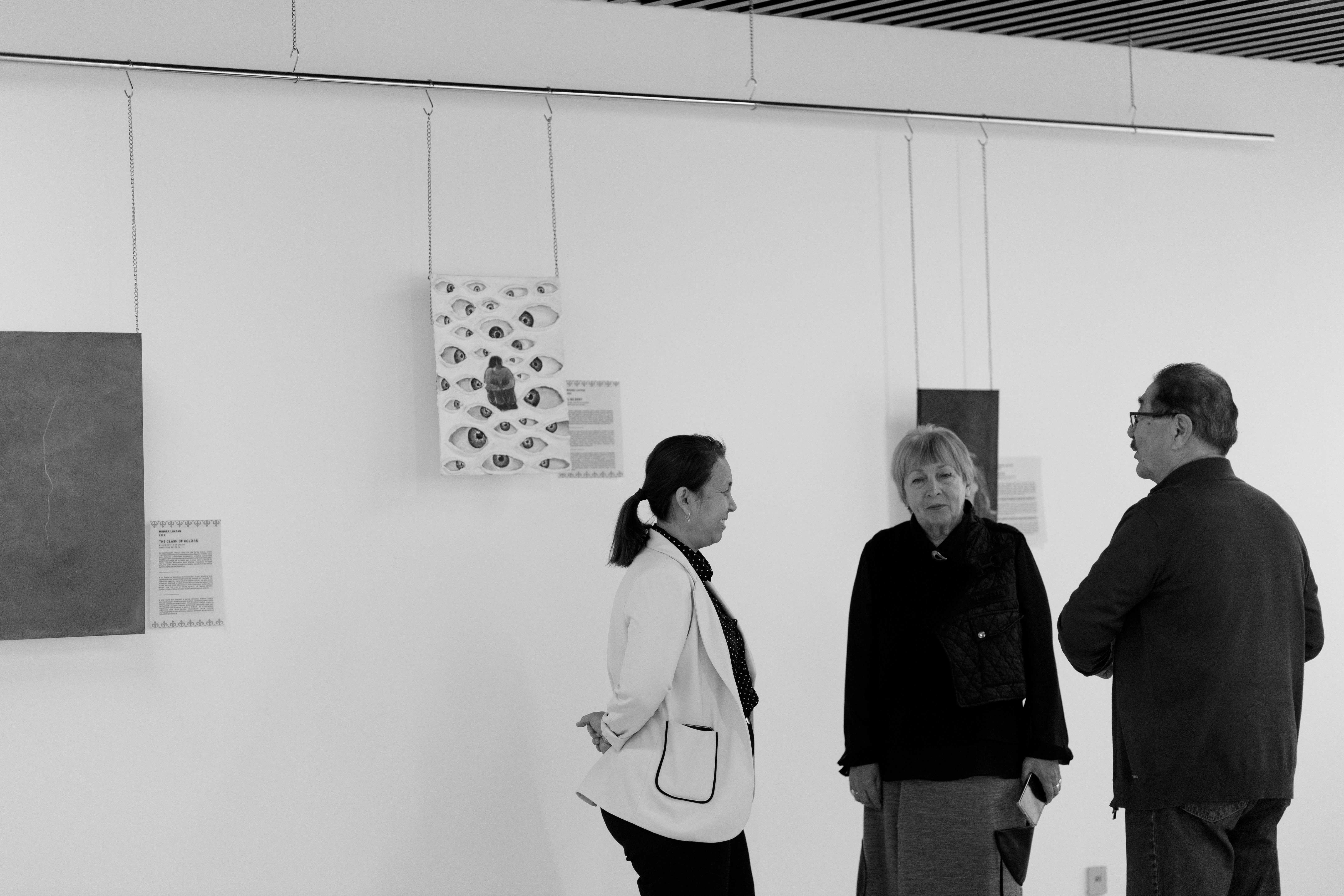
within society. The painting "El Ne Der" depicts the Kazakh habit of
living with the thought "isn't it right?" The large, voluminous eyes
symbolize the constant gaze of society, which judges and oppresses. Through
this image, the work conveys the fear of judgment and shows how public opinion
limits personal freedom.
The exhibition also highlights
the role of the Kazakh language as a key element of the national cultural code.
According to the organizers, language is not only a means of communication but
also a crucial tool for preserving identity and cultural continuity. The
artistic images encourage the viewer to a deeper understanding of the
significance of their native language in the face of global change.
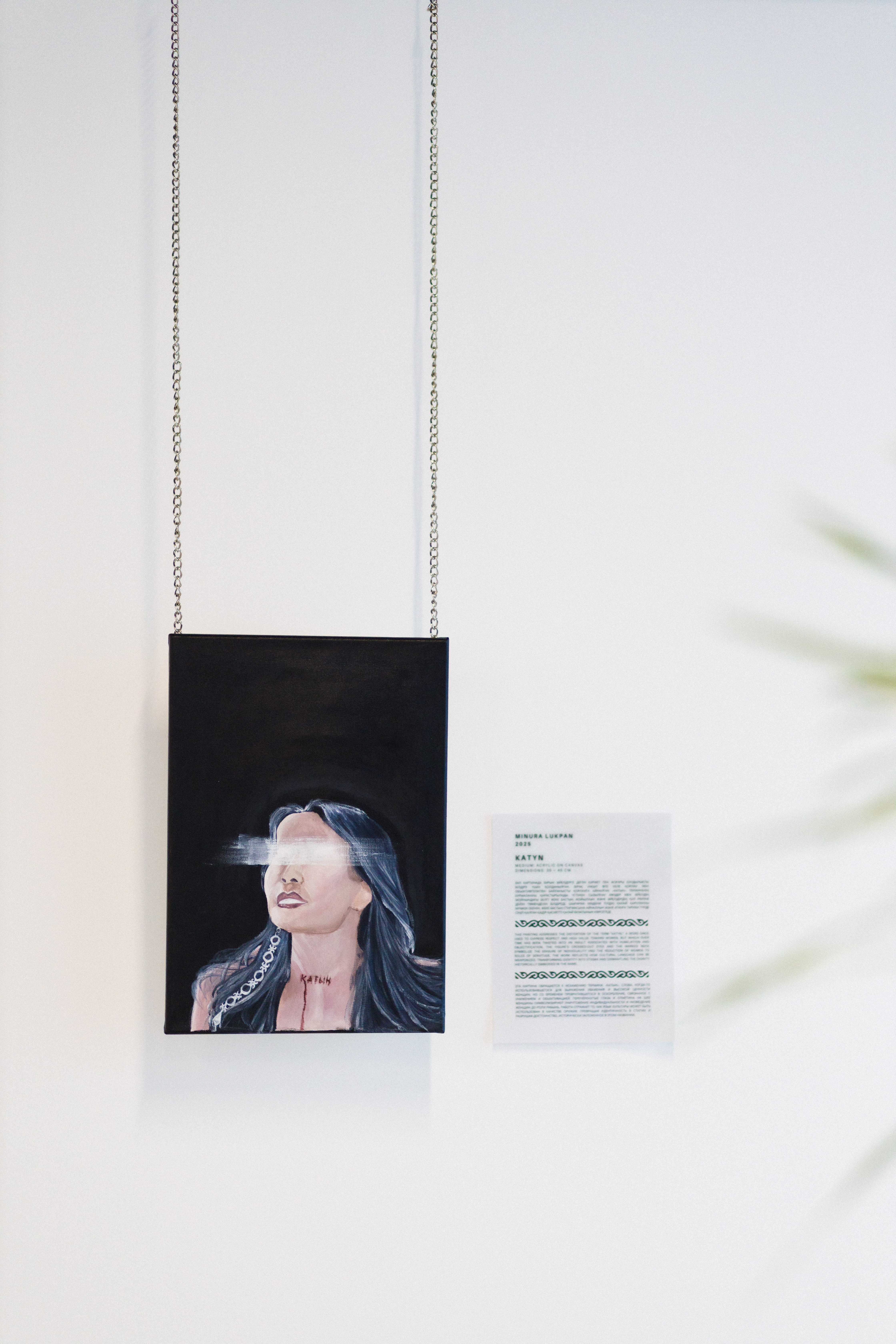
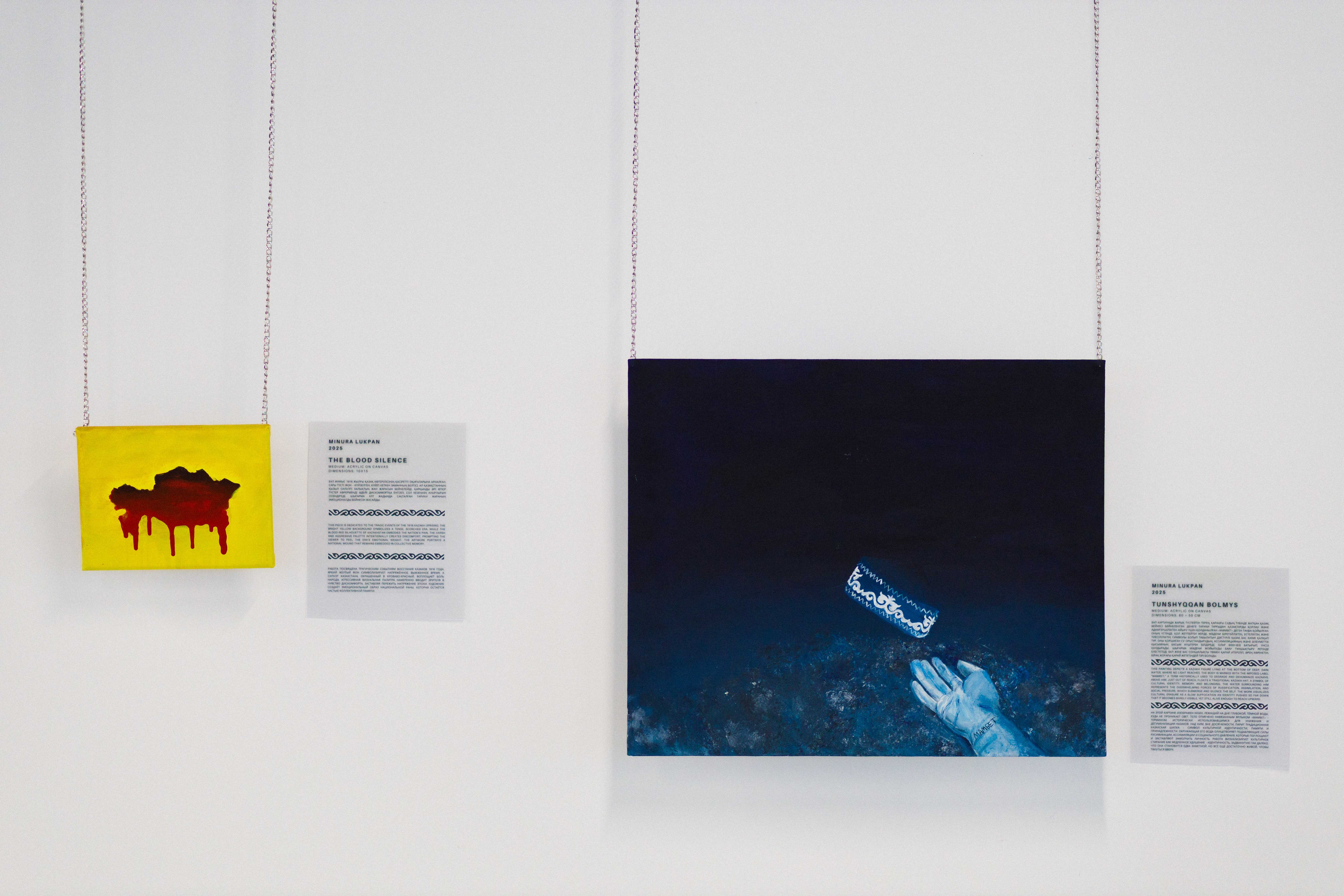
The works "Mambet" and
"Katyn" reveal how the loss of the true meanings of words leads to
the distortion of cultural memory.
"Mambet." The word once denoted a noble and
hardworking person (Mambet batyr, clan, aul), but today it has become an
insult. This reflects a disconnection from one's roots and an internal
devaluation. "Katyn." Derived from the Turkic title
"khatun," denoting a woman of high status. Nowadays, the word often
has a crude connotation, demonstrating the devaluation of the female image and
cultural values.
The exhibition generated keen
interest among residents of the capital and young people. It was attended by
master's students in the Design program, as well as students in International
Relations, History, and Psychology, who were able to discuss the key ideas of
the works on display with the author.
Why is interest in cultural heritage growing today?
According to Galina Nikolaevna, a
PhD candidate in philosophy, this is due to the nature of cultural memory
itself:
"Cultural memory is ingrained in each of us as a
consequence of the social experience of past centuries. At certain periods, it
is activated, finding reflection in various forms of art. Reminiscences of
themes from the historical past are a constant component of the artistic
process," notes Galina Nikolaevna.
What contribution does this exhibition make to the public
discussion of the history and culture of Kazakhstan?
She emphasizes that the young
artist's artistic expression has significant social significance.
"Every voice of anyone who cares about the history
of their people is important. Minura's figurative interpretation of the
historical past demonstrates the interest and compassion of the younger
generation of Kazakhstanis for the tragic events of the past. Among the works
presented by Minura, there is also a sensitive and vulnerable approach to
gender issues in our time. This is a marker of our contemporaries' concern for
both the past and the present of their people."
Can art preserve everyday traditions that are gradually
disappearing?
"Yes, undoubtedly, art helps
preserve cultural memory, captured in the visual arts. But... the rapid
dynamics of civilization and globalization, which are leveling out ethnic
distinctiveness, are reducing the level of influence."